



Article
SLA vs KPI: The Difference and Why Both Matter in Support Contracts
Many buyers sign an SLA and then track KPIs in a separate report, and that split is where service quality slips. The SLA is the service promise both sides sign, while KPIs are the measurements that show whether daily work keeps it. An SLA with no agreed quality level and no measurement window rewards speed over resolution. A stronger contract puts the SLA, the quality level, the KPIs, and the pay model in one agreement. Pay per resolved contact is one option. That way, a missed target means the same thing to the buyer, the provider, and the team doing the work.
What are SLA and KPI? Meaning and definitions
SLA stands for service level agreement, and KPI stands for key performance indicator.
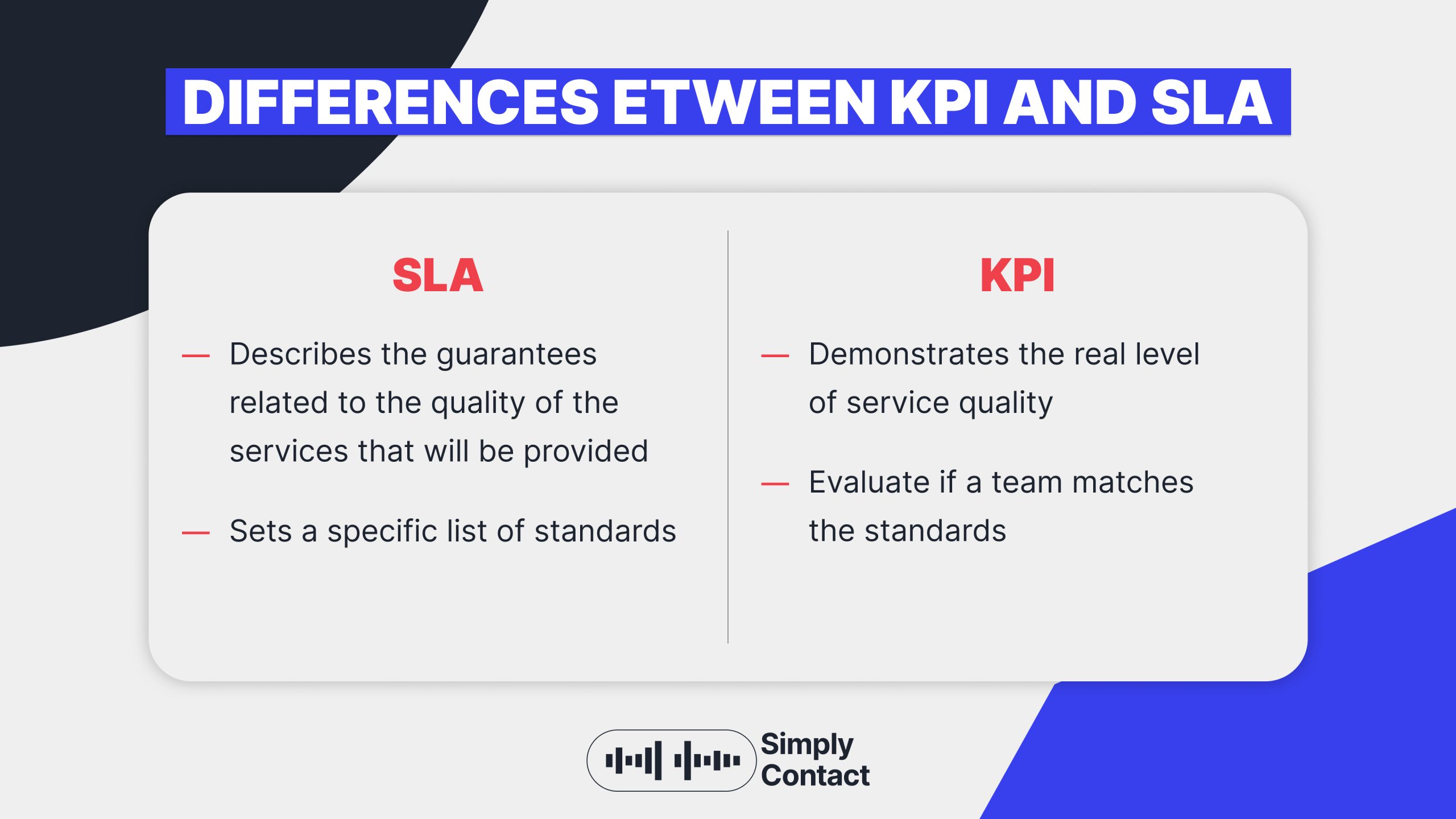
An SLA is the service promise written into the contract between a provider and its client. KPIs are the metrics a team uses to measure performance against its goals, including the targets the SLA sets. The agreement sets the standard, and the indicators show the gap, if there is one.
KPI vs SLA: Key differences and how they work together
A KPI is a metric used for internal performance measurement and monitoring, while an SLA describes service commitments. The SLA sets out the obligations between partners, and KPIs show how well the provider meets them.
Ownership also differs. The buyer and the provider both sign the SLA, while the operating team owns the KPIs. The SLA is written into the contract, with a measurement window, exclusions, and an operational level agreement (OLA) behind it. A miss on the SLA can trigger a service credit. A miss on a KPI usually leads to coaching or a process fix.
Why customer support needs both KPIs and SLAs
These tools have the most impact when they are used together. The SLA sets expectations that both parties have agreed to. KPIs then show whether daily work stays in line with those terms.
As an example, an SLA might set a first response within one hour for an exact share of tickets, written as a percentage. A KPI then measures actual performance and shows whether that target was met.
SLA compliance can be calculated with this formula:
Calls or tickets handled within the SLA target / total number of calls or tickets x 100
The result is the percentage of cases that met the target, which shows how far the team is from the agreed level.
It is only one example of metrics an SLA may contain, while businesses can develop much longer lists depending on their services. For instance, customer service providers often refer to KPIs such as these in SLAs:
- First response time
- Customer satisfaction score
- Net promoter score
- First contact resolution
- Average resolution time
Call center SLA examples include speed of answer, email response time, and case closure. On the Wizz Air program, 80% of calls were answered within 35 seconds. In the same program, 100% of emails were responded to within 5 days, and 95% of cases were closed within 30 days. To improve the service level against targets like these, set the roster, overflow, and routing before volume rises. Then track the KPIs behind each target in the same measurement window.
SLAs and KPIs in practice: The Fareportal case
A written SLA, tied to a quality level, gives the buyer a clear standard and states the remedy if that standard is missed. It also gives the provider a measurement window, so both sides judge the same work in the same period.
We are willing to be paid per resolved contact.
Fareportal, a travel technology company, is one of the travel clients Simply Contact supports. As Fareportal’s first outsourcing partner, Simply Contact refined processes, training, KPIs, and responsibilities as new requirements emerged.
Common mistakes companies make when working with KPI and SLA
Companies that are just starting to work with SLAs and KPIs often make mistakes that affect the whole process. Four of them come up most often.
Unclear goals
Sometimes, business owners state just “quick issue resolution” and fail to specify the exact time frames or priority of critical cases. If team members are uncertain about instructions and a clear definition of this so-called “quick resolution,” they may fail to match the goal. If you note clear and realistic metrics you want to see during the collaboration, the service provider will be more likely to achieve the required result and avoid confusion among agents.
Lack of solutions for process automation
Automation can make monitoring more accurate and simpler for management. AI-powered monitoring systems can analyze a larger volume of processed cases and create reports for further evaluation and process adjustments. If you also implement the system for escalation situations, it will also reduce response time and potential issues with overdue cases. For instance, smart ticket sourcing can mark critical cases and route them to suitable teams or agents.

Incorrect metric choice
Teams often track metrics that are easy to collect, rather than the ones that show whether quality held. A typical mistake is to measure speed without a quality level. First contact resolution and the quality score can then fall while the clock looks good. The fix is to choose core call center KPIs that include quality, not only speed. Vanity measures that do not change coaching or pay should be dropped.
Measurements without further actions
When you detect weak points in your workflows, it is important to find a solution for how to fix the issue, not just indicate it. The best you can do with gaining insights is to develop a strategy for upgrading the process and improving results. It may include the use of more efficient tools, process optimization, team scaling, or extra training for agents.
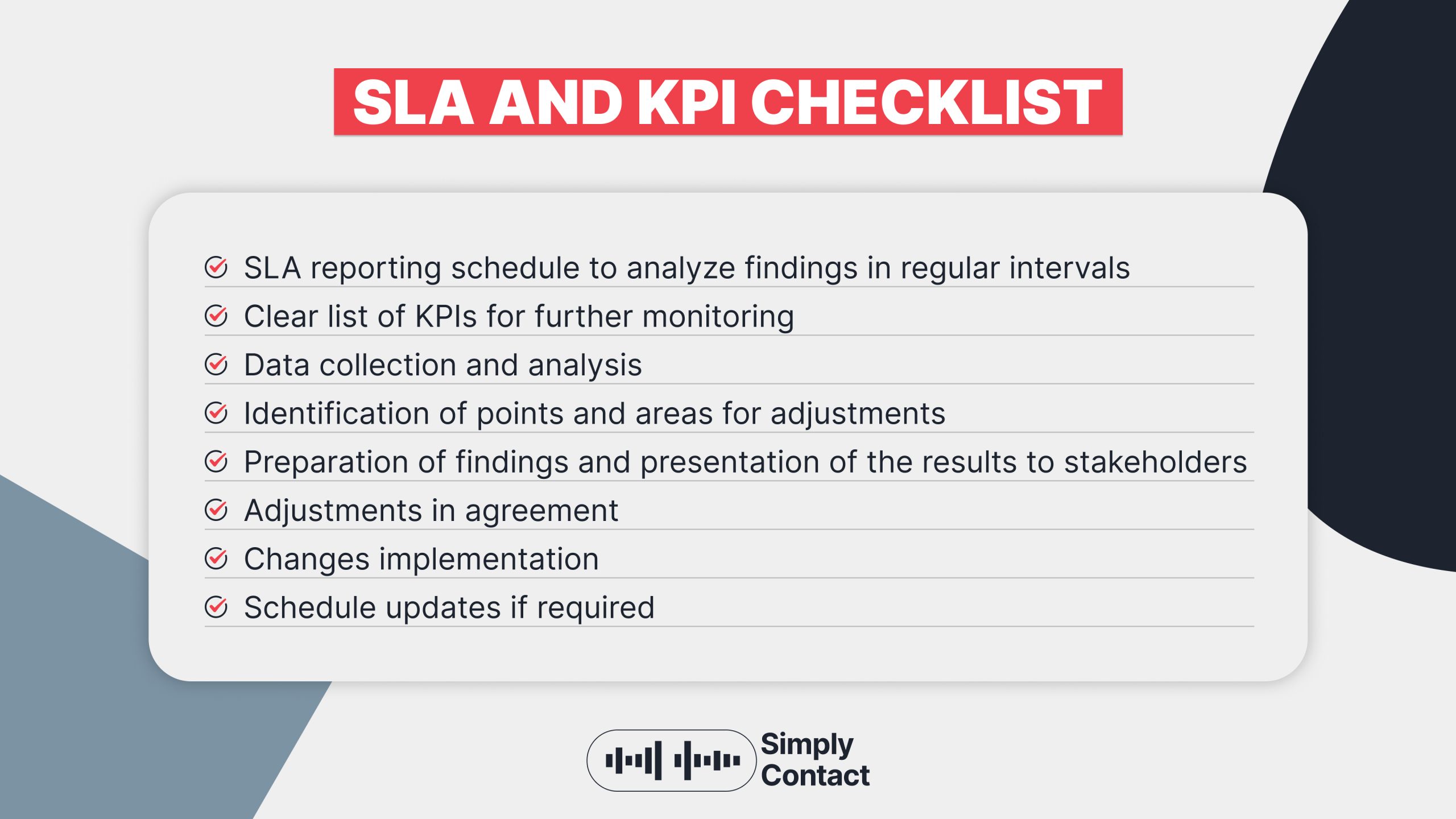
SLA and KPI checklist for your support team
The checklist below covers the items a support team should confirm before an SLA and its KPIs go into a contract.
Conclusions
SLAs and KPIs work when they sit in the same contract, with a quality level and a measurement window both sides can use. Pay can be tied to resolved contacts at that quality level, so both sides have something to lose if the work slips. A customer support outsourcing agreement is the place those terms should be written down. Talk to our team about how those terms are set up.

Newsletter
Subscribe
Subscribe to our newsletter to receive valuable industry insights and the latest research reports.