



Article
Customer Service in Logistics: Why It Decides Who Wins
Logistics operations scale, so customer service in logistics should too. However, customer experience often doesn't keep pace. The gap between the two is where companies lose customers they worked hard to acquire, because a delayed shipment went unacknowledged, a return took three weeks, or an agent couldn't access the tracking data needed to answer a basic question.
Logistics customer service is a designed system that either absorbs disruption cleanly or amplifies it. Companies that treat it as a strategic function retain more customers, resolve issues faster, and spend less per contact. Companies that don't treat it that way find out the hard way, usually during peak season.
What is customer support in logistics?
Customer service in logistics is the set of processes and interactions that support a customer throughout the entire logistics process: from pre-order inquiries and order placement to delivery, and the resolution of post-delivery issues, like returns or others.
Generic CX is a broader concept and might mean interactions with goods, services, and channels. Customer service in logistics management starts with handling pre-purchase questions. Then it covers shipment exceptions, coordinating between warehouse systems and carriers, managing returns that involve physical collection, and communicating with customers during disruptions that are often outside anyone's direct control.
The defining characteristic of logistics support is that it operates at the intersection of information systems and physical operations. A customer asking "where is my order?" needs an agent with real-time access to tracking data across potentially multiple carriers and handoff points. A customer filing a damage claim needs an agent who understands the claims process for that specific carrier and can document the case correctly.
Customer service in logistics management also deals with structural complexity: demand peaks (peak season, sales events), multi-carrier environments, cross-border shipments, and supply chain disruptions that can affect thousands of customers simultaneously.
Why customer service matters in logistics operations

Keep in mind that customer experience affects business success: it can strengthen trust or break reputation completely. Poor logistics customer service costs money in three ways: it generates repeat contacts (the same issue handled multiple times), it produces churn, and it creates negative word-of-mouth that raises acquisition costs.
The importance of customer service in logistics becomes clearest during disruptions. Late deliveries account for approximately 44% of logistics complaints, according to Statista’s e-commerce consumer research. That means nearly half of all incoming support volume during disrupted periods is driven by a single operational failure type, and how that failure is communicated and resolved determines customer retention more than the delay itself. Poorly handled requests can seriously damage brand trust and turn temporary problems into lost revenue.
Metapack’s delivery experience research found that 56% of online shoppers will not use a retailer again after a poor delivery experience. The company may not control the delivery experience, but it can entirely control the CX during interactions with customer support.
Logistics and customer service seriously depend on operational efficiency. When customers repeatedly contact the support team about issues that could have been prevented through proactive communication, agents spend time handling requests they could actually avoid. Improving processes and keeping customers informed can reduce workloads and create a smoother delivery experience.
Key elements of logistics customer service
Logistics customer support operates across three distinct phases. Each phase has different customer expectations, different support tasks, and different failure modes. The three-phase model from logistics and supply chain management research frames it as pre-transaction, transaction, and post-transaction.
| Phase | Customer Expectation | Support Tasks | Common Failure Mode |
| Pre-transaction | Clear delivery timelines, transparent costs, easy-to-understand policies | Handling delivery estimate questions, explaining return policies, answering pre-order queries | Unclear delivery windows; confusing or hidden return policies |
| Transaction | Real-time visibility into orders; fast help when issues arise | WISMO (“Where Is My Order”) support, exception handling, live tracking updates, rerouting | Lack of proactive delay communication; no access to real-time tracking data |
| Post-transaction | Smooth returns, quick claims resolution, accurate refunds | Managing returns, processing damage claims, issuing refunds, follow-ups | Slow returns; multiple contacts needed to resolve a single issue |
Most logistics companies over-invest in transaction-phase support (because that's where volume is highest), under-invest in pre-transaction design (which would reduce that volume), and under-invest in post-transaction recovery (where retention is actually won or lost).
Customer service in logistics and supply chain management is most effective when all three phases are designed together, with consistent agent training, shared knowledge bases, and escalation paths that work across the full customer journey. As a result, these three phases work together to shape the customer experience beyond delivery itself, from setting expectations to post-transaction follow-up.
Common challenges in logistics customer support
Logistics customer support teams deal with recurring friction points that drive high contact volume and customer frustration. Most issues are rooted in gaps in communication, systems, and process design. Many are caused by operational complexity.
- Delivery delays. Delays are the single largest driver of inbound contact volume. The problem is that most support operations are set up to respond reactively. A customer who receives a proactive message before they call is a different conversation from a customer who has been waiting and heard nothing. Most logistics support teams lack the tooling or workflow design to send proactive outreach at scale during disruptions.
- Communication breakdowns. Each handoff is a potential information gap. Agents fielding calls often have access to one system's data but not another's, which means the answer a customer gets depends on which part of the journey their parcel is currently in and which carrier's portal the agent has credentials for.
- Order errors and mis-picks. Wrong items, damaged goods, or missing components generate high-effort contacts — these errors typically require photo evidence, cross-referencing with warehouse dispatch records, and either a resend or refund process. Logistics customer support for these cases is only as fast as the internal claim process behind it.
- Inefficient returns management. The customer experience of a return is a strong predictor of repeat purchase behavior. Companies that treat returns as an afterthought in their support design typically have higher churn in their post-purchase phase.
- Scaling without governance. Growing customer service in logistics management without building the governance layer produces an operation where volume grows, but quality doesn’t.
How to improve customer service in logistics
Workforce stability: importance of customer service in logistics
High agent turnover creates repeated training cycles and leaves logistics support teams without experienced staff. Keeping trained agents and creating a stable workforce supported by high-quality knowledge bases improves consistency and helps maintain service quality as volumes change.
Omnichannel support
Logistics customers contact support via phone, email, chat, and increasingly social messaging. Omnichannel means an agent handling a chat query can see the customer's previous phone call. Without that context, customers repeat themselves, agents re-diagnose resolved issues, and handle time goes up. How to improve customer service in logistics at the contact level starts with agent tooling.
Proactive communication
The single highest-leverage change is shifting from reactive to proactive communication during exceptions. An automated alert that tells a customer their delivery will be delayed by one day, sent before they check tracking, eliminates a contact.
Supply chain visibility tools
These tools collect information from carriers, warehouses, GPS systems, and other sources and enable agents and users with clear and up-to-date information about shipments and their location. They help support teams detect potential problems, such as missed delivery times or route changes, and proactively inform customers about them.
AI-assisted routing
AI-driven customer service for logistics can significantly absorb routine volume. WISMO queries, tracking updates, and basic claims status checks are high-volume, low-complexity interactions that AI handles well. Routing these to self-service or AI-assisted channels frees human agents for interactions that require judgment: exceptions, escalations, and claims disputes. Logistics customer service operations that deploy AI selectively report measurable reductions in average handle time without quality degradation.
Outsourcing for scale
When logistics support volume grows faster than internal capacity, outsourcing is often the right answer, but only if the vendor has genuine logistics experience. A call center staffed with generic agents who've never handled a WISMO interaction or a carrier exception claim will produce worse outcomes than the internal team it replaced. The right outsourcing partner reduces cost while maintaining or improving resolution quality.
The role of AI and technology in logistics support
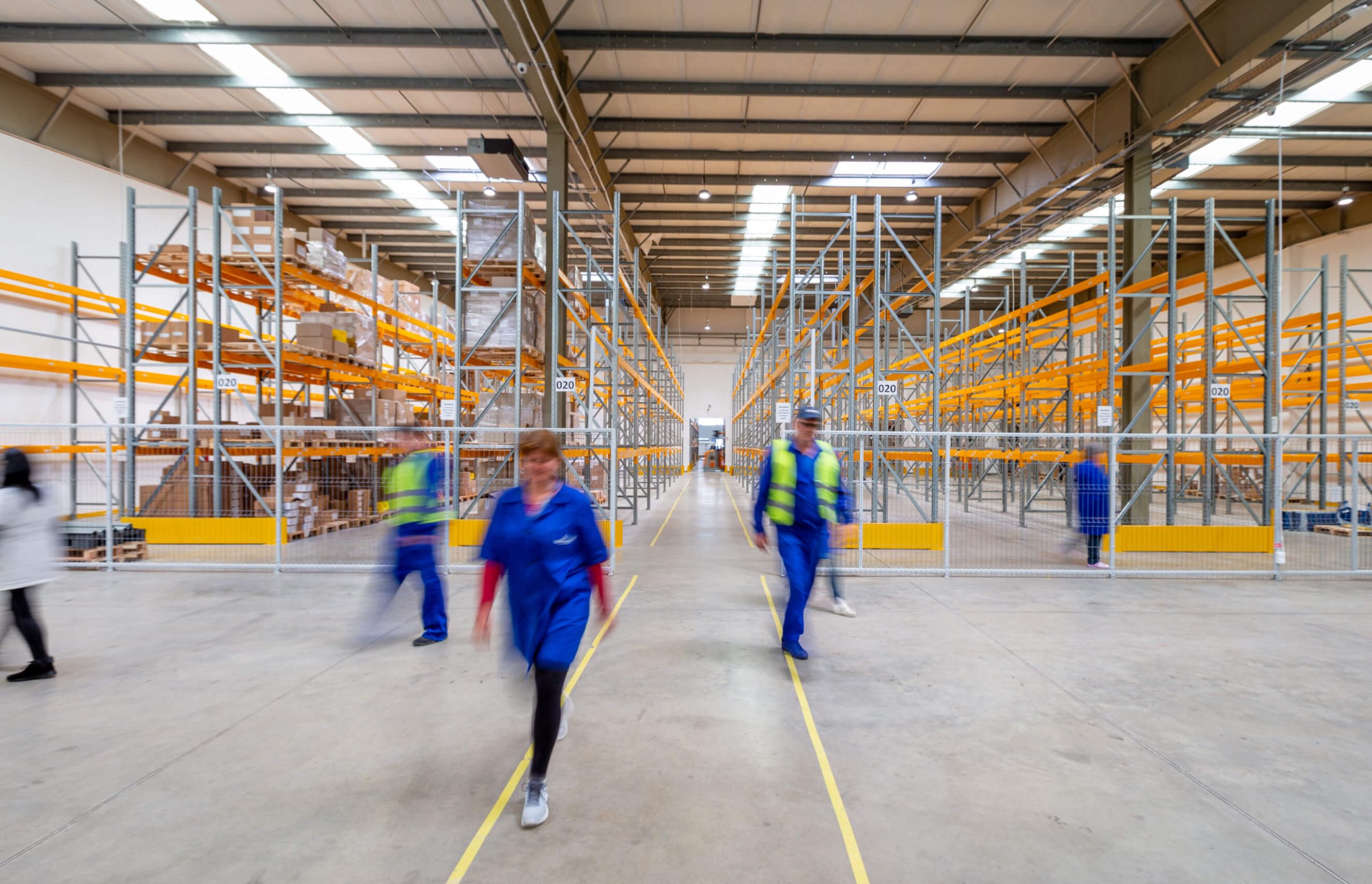
When customers are expecting a delivery, they want clarity and control. AI-driven customer service for logistics doesn’t mean only optimizing logistics processes. It is about using a valuable tool for customer support that gives customers more control over delivery steps and allows them to get better assistance.
AI in logistics support
In a logistics customer service department, artificial intelligence assists with routing inquiries to the right agent and speeding up responses. It cuts manual workload and helps support teams stay ahead of delivery problems instead of reacting after they happen. From the customer’s side, they can use an AI chatbot to receive instant help that doesn’t require immediate human intervention. The use of artificial intelligence is not a replacement for human agents in complex and high-stakes operations; it’s their enhancement.

Automation and self-service
Advanced self-service tools for process automation let customers track orders in real time, update delivery details without extra steps or phone calls, and overall solve simple issues on their own. Thanks to self-service, agents have more time to focus on more immediate cases and maintain fast service during peak load (discounts, promotions, seasonal demand).
Real-time tracking
Real-time visibility builds trust. When customers see clear tracking updates and accurate delivery windows, uncertainty disappears. Support teams can communicate confidently, manage expectations, and notify customers about delays before they ask. Strong visibility provides accurate delivery forecasts, fewer “Where is my package?” contacts, and proactive communication when disruptions occur.
Simply Contact's expertise in logistics
Simply Contact established a call center outsourcing partnership with Nova Post, the largest private logistics company in Ukraine and a carrier that delivers worldwide and handles over 10 million parcels every month. Check our collaboration results in detail in the full Nova Post case study.
The outsourced omnichannel contact center supports roughly 7,500 customer requests per day. Most questions involved shipment status, delivery terms, loyalty programs, and service details. Our team also trained on the company’s internal processes, tools, and customer expectations.
The support scope included dispatch and delivery guidance, shipment cost and timing estimates, office and storage information, payment options, and courier call handling for both individual and business customers.
We understand the importance of customer service in logistics, and our goal was faster responses and more issues solved on the first contact. With clear workflows and close collaboration with the client’s teams, we helped keep service quality high and customer satisfaction strong across a large daily volume.
The takeaway is practical: at high volume, support quality is a function of process design and knowledge infrastructure, not agent count alone. Clear workflow mapping, accurate knowledge bases, and training built around real scenarios agents will face — that's what moves the metrics at Simply Contact.
Conclusion
Customer service in logistics is a designed operational system that determines how well your business absorbs the disruptions that are inevitable in physical goods fulfillment and whether customers who experience those disruptions come back.
Companies that get this right build proactive communication, invest in agent knowledge and tools, deploy AI where it fits, and treat the three phases of the customer journey as a connected system rather than separate queues.
If you’re evaluating how to structure or scale your logistics support operation, Simply Contact has the sector experience to make that conversation practical. Get in touch to discuss your specific situation.

Newsletter
Subscribe
Subscribe to our newsletter to receive valuable industry insights and the latest research reports.