



Article
How Does Customer Perception Support Your Business?
How customers see your business can matter just as much as how you position it. Their perception is shaped by every interaction with your brand — from the product itself to advertising, customer service, and post-purchase experience.
In fact, 84% of customers say the experience a company provides is as important as its products or services. Understanding that perception can help businesses strengthen trust, loyalty, and the overall customer experience.
In this article, we explain what customer perception is, what influences it, how to measure it, and what businesses can do to improve it.
What is customer perception?
Customer perception is how customers view a company or brand, shaped by their direct and indirect experiences with it.
In the past, customers typically chose products or services from well-known companies and brands. However, today's customers base their decisions on personal experiences. Customer experience increasingly influences which brands people choose, return to, and recommend. This makes it crucial for businesses to meet customer expectations and maintain strong communication and relationships with them. Customer perceptions significantly influence a company's value. They also provide insights into marketing strategies, highlighting areas for improvement to foster positive customer opinions.
Why is customer perception important?
How we interact with others leaves a lasting impression on them, influencing their future actions. This is especially true for customer perceptions, which play a crucial role in determining whether people will continue to engage with your brand.
Customer experiences shape their perceptions and influence how they talk about a company to others. A positive perception arises from enjoyable interactions with a company, fostering a strong, loyal, and growing relationship between customers and the business.
However, shifts in customer perception can harm a brand's reputation and, ultimately, its financial success.
The following two factors help to determine customer’s perception and loyalty toward your company:
Shared values
Customers are more likely to purchase from a company that shares their values and mindset. When customers see that a business promotes values aligned with their own, they are more inclined to support it, leading to increased sales and brand growth. According to a survey, 71% of customers prefer to buy from brands that share similar values and mindsets.
Brand trust
Trust builds confidence, encouraging customers to buy from a brand without hesitation. A trusted brand enjoys higher customer engagement, with customers more likely to make purchases, recommend the brand, and promote it to others.
Trustworthy companies have a greater influence, can navigate crises more effectively, and outperform competitors in marketing efforts.
What factors affect customer perception?
Numerous factors can influence customers. It's not just about advertising. When customers decide to buy a product, they consider everything: the quality of your customer service, the way you communicate, the words you use, and much more. Your marketing efforts and how you interact with customers play a crucial role in forming their opinions.
Here are some factors that can play a significant part in forming customer perception.
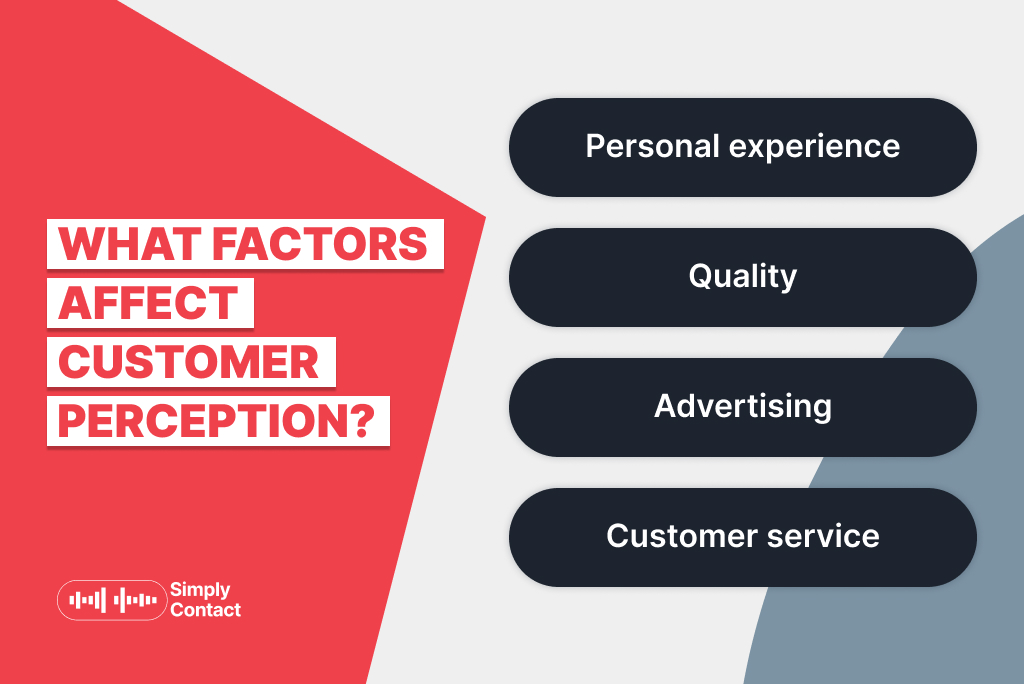
Personal experience
Nothing shapes a customer's view of your business more than their personal experience. This comes from their own purchases and interactions with your brand. The saying “seeing is believing” applies here; when customers see your brand, they can trust what you promise.
Positive service experiences and effective feedback management can strengthen trust and encourage customers to return.
Quality
Customers expect high quality. If your product doesn't meet quality standards, it will quickly fall behind in the market competition. Quality can be defined by various attributes. It's important to research the market and understand the specific quality expectations of your customers. Focus on improving these attributes to enhance the overall quality of your product.
Quality is at the heart of how customers view your product. While advertising might convince them to buy once, the quality of your product determines whether they will return.
High quality can lead to repeat business, while poor quality may drive customers away. Once you achieve high quality, it's crucial to maintain it.
Advertising
Advertising is a powerful tool that leaves a lasting impression on its audience. How you present your company, the messages you share, and the image you project greatly influence how others perceive your brand. Effective advertising can significantly boost brand growth by steering perceptions in the right direction.
Customer service
Customers are crucial to any business. Your customer service should make customers feel valued and important. The more support you provide, the more your brand's reliability grows. It's essential to invest in your customer service team, ensuring they are always ready and eager to assist, guide, and support your customers.
Poor customer service can negatively affect your brand, making customers feel ignored. Therefore, you need to ensure the quality of customer service. How customers perceive your service plays a significant role in shaping your brand's reputation.

How to measure perception?
Every brand aims for growth as it signifies the development and expansion of the business. Understanding how customers perceive your brand is crucial for this growth. Here's how you can measure perception effectively:
Customer interviews
Consider conducting customer interviews to gain a deep understanding of what people think about your brand. Although this method requires more effort, it offers valuable insights into customer perception. Through detailed conversations, you might uncover insights that go beyond simple responses.
This feedback allows you to identify areas for improvement and make necessary adjustments.
Surveys
You can conduct customer satisfaction surveys, a popular and convenient way to measure perception. Several survey methods can help you differently. Online surveys, for example, can quickly provide deep insights.
Another effective tool is the Net Promoter Score (NPS) Survey, known for its simplicity and effectiveness. These surveys can be conducted through an app, on your website, or by emailing customers, inviting them to share their feedback.
Reviews
Reviews are often one of the first things customers check before choosing a restaurant, hotel, service provider, or product. They provide a direct view of how existing customers perceive the brand.
You can monitor your Facebook page, check the comments on your website, or follow relevant hashtags. Social media reveals the full story. If your service doesn't meet expectations, customer reviews can be harshly honest, potentially significantly impacting your business.
How to achieve a good customer perception?
Improving customer perception is crucial for any business, and it starts with making sure customers feel valued. Here are key steps to enhance overall customer perception:
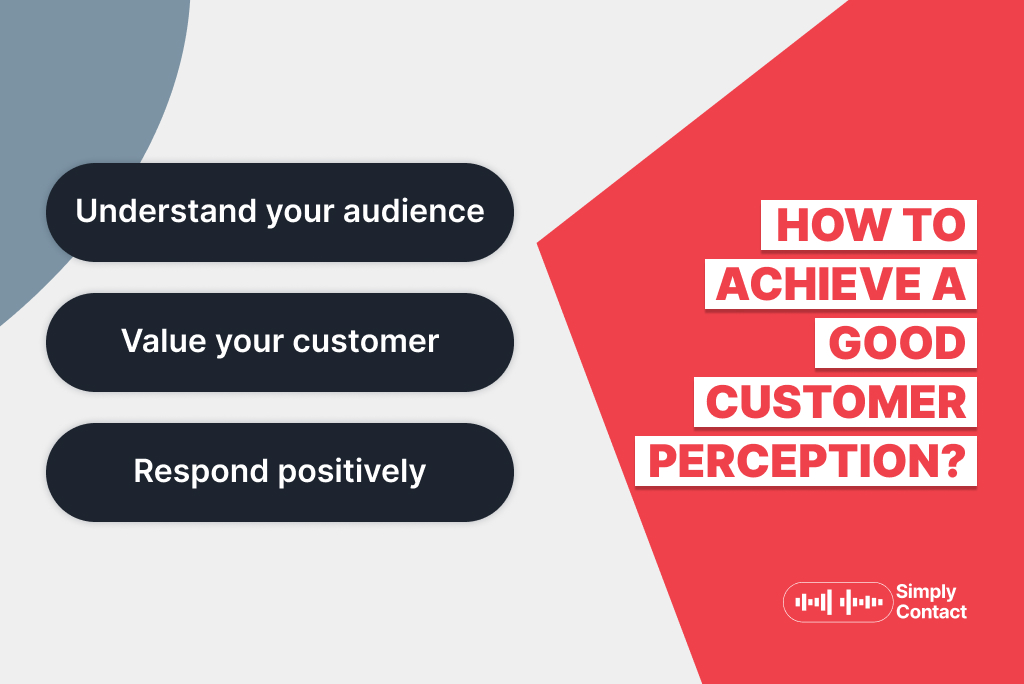
Understand your audience
Understanding your audience helps you adapt communication, service, and marketing to the expectations that matter most to them. While it's impossible to please everyone, striving to meet your customers' needs is vital. Understanding your audience's background helps you develop more customer-friendly marketing strategies.
Value your customer
Show appreciation for your customers by being responsive. Prompt support and quick responses to their inquiries can enhance customer retention. Being readily available and responsive will make your customers feel valued and more likely to trust and rely on your services in the future.
Respond positively
Every positive aspect can have drawbacks, including receiving criticism. However, respond to negative feedback constructively by assuring you will address the concerns raised. This approach reassures other customers and helps protect your reputation.
Summary
Customer perception is shaped by every interaction people have with your brand, from product quality and communication to customer service and feedback.
The best way to improve it is to understand what customers expect, measure how they actually see your business, and act consistently on what you learn.
Strong customer perception builds trust, loyalty, and a better overall customer experience.

Newsletter
Subscribe
Subscribe to our newsletter to receive valuable industry insights and the latest research reports.