


Article
Will AI Replace Call Center Agents In The Future?
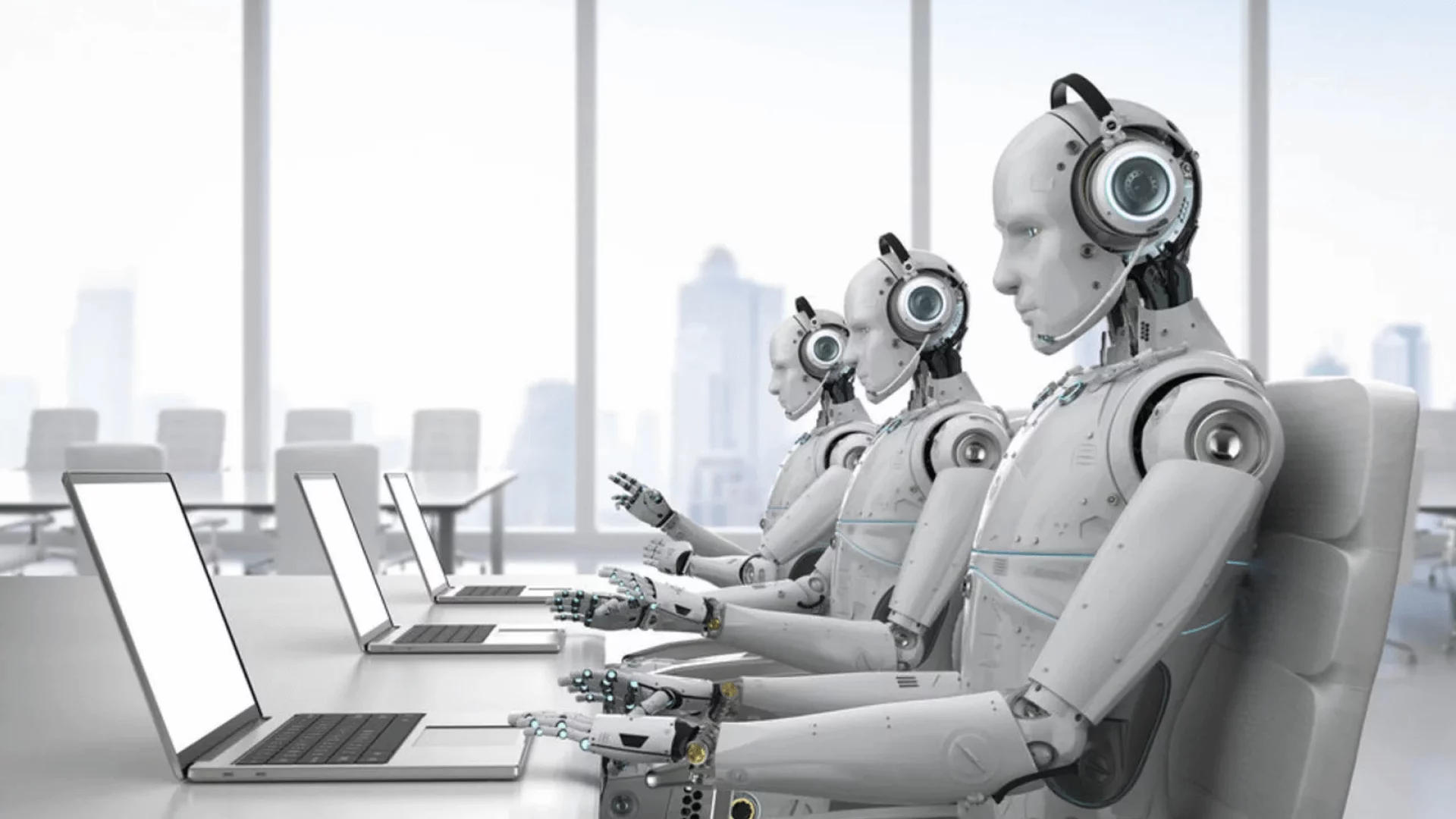
AI is already taking over many routine tasks in call centers, from basic inquiries to routing and agent assistance. That naturally raises the question: will companies still need human agents?
In most cases, yes. AI works well with predictable tasks, while people are still better at handling complex issues, emotional conversations, and situations that require judgment.
This article looks at where AI can replace manual work, where human agents still matter, and how call center roles are changing as a result.
Impact of AI in the call center
Call centers have always capitalized on new-age technologies to improve operations and services from innovative routing systems to IVR, and now from IVR to AI.
When agents attend back-to-back calls, they become tired. Their exhaustion will likely impact the service they deliver. But when agents work in the AI call center, many of their burdens get shared! AI goes many steps ahead to solve problems that are frustrating agents.
AI deals with many questions and matters before they reach the call agents, saving call agents time and company resources.
Take a look at how AI impacts the call center!
Save agents time to reply to frequently asked questions
AI Studies reveal that AI-powered conversational agents can manage up to 80% of frequently asked questions. Questions related to delivery, change of payment method, etc. AI can also escalate issues to a human customer agent if required.
Artificial intelligence (AI) can support call centers in two modes:
Firstly, by using self-service options, AI can seamlessly supply customers with the right information at the right time. Therefore, AI eliminates the necessity of a customer service agent for a call.
Secondly, AI provides a lot of information to customer service representatives so that they can handle complex issues quickly and efficiently.
Categorize questions from customers who communicate via chat or email
Undoubtedly, Artificial intelligence can serve as a perfect aid for a call center in the near future. AI can address tier-1 interactions hassle-free, effectively, and satisfactorily. Meanwhile, AI can also enhance customer representatives’ problem-solving ability by providing relevant and sufficient information.
It shows customer service agents’ duties are becoming more varied. The bots and AI respond to routine questions through online chat or any other channel.
AI can predict the urgency of a call by monitoring the customer's history. Once a customer has called an agent in an emergency, AI will understand that a call from the same customer will likely be urgent. Therefore, AI will place that call on top of the queue to be priorly answered by a human agent.
When artificial intelligence and customer reps work side-by-side and data insights are integrated with a personable phone, it develops the best customer experience.

5 reasons human agents still matter in AI-powered call centers
Thanks to AI technology, call centers' burdens have been reduced amazingly. It supports call agents in numerous ways.
But no matter how beneficial the AI system is, it can never replace call center agents! There are many things that AI systems cannot perform!
You can scroll down to figure out jobs that AI can never replace!
Human support still matters for complex and sensitive issues
Businesses cannot entirely replace call centers with AI!
Human agents can recognize emotional cues, interpret context, and adapt their communication to situations that do not follow a predictable script. By automated calls, the business cannot show empathy to the customers. This interaction can cause the company to lose customers.
Soft skills are fundamental these days for customer satisfaction and retention. Only customer representatives can deal with customers using those skills, but none are followed via robotic calls.
Thanks to the AI system's rational, accurate, and fast approach. But it is not empathetic, intuitive, or culturally sensitive. Only a human can read a face and mind instantly, so these abilities effectively help in dealing with customers.
AI can reduce your agent’s workload but not replace them
AI call center doesn’t include a rushy, burdened, or stressful environment. Thanks to the AI system, which shared much of the call agents’ burden by dealing with casual issues,
Nevertheless, AI cannot resolve every complex matter or spontaneous and random question that customers raise. So, call agents must listen, answer, and satisfy customers. If, in any case, a customer is not satisfied or has a lengthy problem-solving procedure, agents transfer the call to another agent.
So, it is a fact or relief to say that AI will not replace humans!
AI can still produce inaccurate or context-poor answers
People are crazy about Artificial Intelligence technology, but it does not always serve the way it is thought. The computing system processes information worldwide in an astonishingly little time. The notion of AI has been significantly based on these abilities.
Seeing the machines’ ability to think and work like humans has been pleasing — especially in activities like language, voice, and image recognition. But it does not always work!
Humans use the brain’s memory, computing power, and thinking ability to process problems. In contrast, AI-powered machines rely entirely on data and instructions given into the system.
Human Intelligence deals with situations according to various experiences and incidents. Moreover, humans are flexible, but the AI system is not adjustable. Considering all these facts and several other experiences, it is proved that AI is not correct in many situations.
It does not provide sufficient or relevant information to the customers they contact. Consequently, your business's customer base rate can disastrously suffer. Customer agents and AI can go hand in hand, but they cannot be very effective alone. By using AI services, call centers can seamlessly provide 24/7 support to their customers.
AI requires investment, integration, and ongoing oversight
The performance of AI is based on the algorithm. An algorithm helps for accurate predictions that require plenty of tuning sessions. A well-developed algorithm is costly when implementing AI solutions.
AI demands more computing power than usual. You need to run through hundreds of combinations for data sets and sift through billions of records. So the cost is exceptionally high!
AI performance depends on data, design, and oversight
Nowadays, problems are emerging, and so their solutions should be! But often, AI cannot fix several customers' issues because its set code does not allow it.
A robotic system cannot think itself and work in its programmed frame. So AI is only as worthy as the programmer who develops it.
It is not capable of critically examining or analyzing contexts. The same repeated lines and contexts can neither resolve or satisfy every problem. Conversely, teams and organizations' agents constantly interact with customers by answering their rapid questions.
So creative thinking, developing complex strategies, and dealing with complicated scenarios are jobs that AI can't replace.
Summary
AI is changing call center operations quickly, but the shift is less about replacing people and more about redistributing work between automation and human agents.
AI is well suited to repetitive, predictable tasks such as routing, information retrieval, and basic customer requests. Human agents remain critical when conversations require empathy, judgment, negotiation, or flexible problem-solving.
The strongest support models combine both. Automation improves speed and efficiency, while skilled agents handle the interactions where context, trust, and human decision-making matter most.
For call centers, the priority is not choosing between AI and people, but designing a support model where each is used where it creates the most value.

Newsletter
Subscribe
Subscribe to our newsletter to receive valuable industry insights and the latest research reports.